


Precautions.
- Condensation on the contactors after humidity changes can cause phase-to-phase short circuits — guard against it.
- Keep the machine clean, particularly the dirt between incoming and outgoing phases.
- Inspect, service and maintain it regularly.
- Carry out a full overhaul every 5,000 operating hours.
- Check fasteners for looseness.
- Stop on abnormal noise, clear the fault and restart.
- Replace the die once wear causes bent or oversize reduced ends.
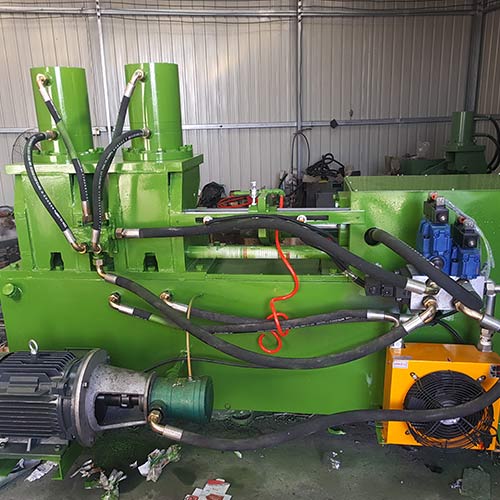
Applications and features. A chipless cold-extrusion machine that pushes the part into a dedicated die in one hydraulic stroke. It is productive, easy to operate, economical in material and consistent in quality, and the reduced section becomes denser so compressive strength rises without losing plasticity or impact toughness. Output is 3–5 parts per minute, 3–5 times that of turning, or 2,000–3,000 pieces per shift. Diameter, roundness and taper errors stay within 0.03 mm, and parts extend 10–15% for a material saving of about 30 tonnes a year on a 20 mm bar at 864,000 pieces.
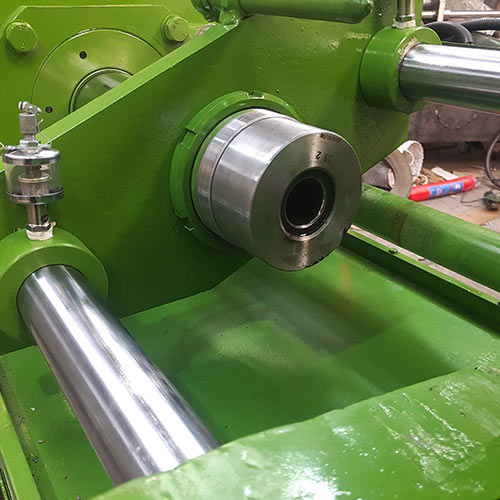
Installation and adjustment. Lift at the designated points with a padded rope, stand the machine on a level floor (concrete where vibration is present), check motor rotation, then set the limit switch for the reduced length. Keep hydraulic pressure as low as the work allows. To replace the die, loosen the front screws, remove the cover, tap the die out from the rear with a soft wedge — never strike the carbide — then refit and tighten. To swap clamping blocks, open the cylinder cover, withdraw the pins, change the blocks by number and reassemble, keeping the old blocks cleaned and oiled as spares.
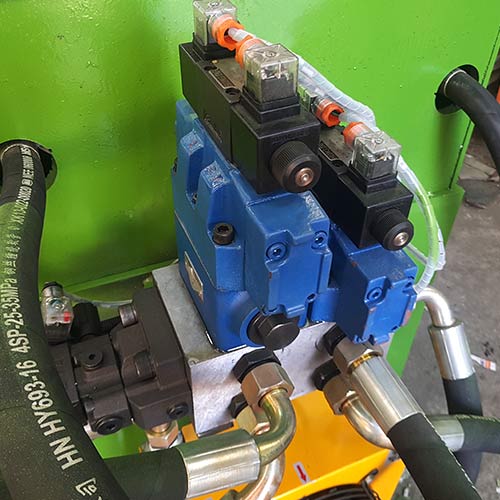
Troubleshooting. Gauge vibration — clean the oil intake. Vibration on feed or return — bleed the cylinder or top up slide oil. Overheated oil — lower viscosity, shorten feed time, reduce pressure, fit a cooler. Pressure will not build — worn pump, thin oil, faulty relief valve or worn coupling. Contactor humming — clean the core faces. Breaker tripping — short circuit, burnt motor, broken line or stuck button. Inching loses holding — check the holding circuit, contacts, plugs and stop button. Failure to stop — welded contacts, damaged button or oily core faces.
 Public Security Filing No. 13052502000329

 Official WeChat


